Thursday, April 5, 2012
Tap and Trade. How America’s Aging Water Infrastructure Could Damage Our Economy.
The pipes that make up our nation’s water systems were not built to last forever. They need maintenance, and in many cases, they need replacement, but government investment to keep our water flowing has dried up. Without significant investment in our clean water delivery systems and our wastewater treatment facilities, we will no longer be able to take clean water for granted. Clean water isn’t just needed for drinking, it’s needed to water our crops and to operate our nation’s energy plants. Obviously, this is not a problem that we can fix by purchasing bottled water. Today’s guest is the national campaign manager for Public Water Works, an effort to bring government investment in our water infrastructure back up to the levels it was in the 1940’s and ‘50’s, when our nation was committed to ensuring that safe and reliable water was a priority from coast to coast. Tune in to Go Green Radio on Friday, April 6, at 9 a.m. PST/noon EST on www.VoiceAmerica.com learn more about what you can do to get involved.


Tuesday, April 3, 2012
Enter the "No Pink Slime Zone"

We're proud to partner with Safeway for our Earth Day contest! Not only have they provided some *amazing* prizes - an organic school garden, a BBQ for a whole class, and five $100 cash prizes - but they are also major trend setters in sustainability.
They were the first grocery store chain in the U.S. to ban "pink slime". You can check out the YouTube video here: http://youtu.be/bzjEurReduE
Safeway has also done a lot to "green" their operations and the suppliers with whom they do business. “Safeway has worked very hard to bring more sustainable food choices to the communities we serve,” says Safeway Vice President of Sustainability, Christy Consler. “Our sourcing team works to provide locally grown, natural, and organic choices throughout our retail outlets, and our consumer brands provide a wide variety of healthy, affordable, and more environmentally responsible food choices for families.” You can learn even more about their sustainability efforts by visit here.
Your local Safeway-owned store may be Vons, Dominick's, Pavilions, Randalls, or Tom Thumb. Wherever you find them, you will find a partner in creating a green, healthy lifestyle. Many thanks to Safeway for supporting the Go Green Initiative on Earth Day, and everyday!
Thursday, March 22, 2012
World’s Coolest Earth Day Contest!

Prizes? Oh, we’ve got prizes – about $10,000 worth of them! Students can compete for $2,500 in cash prizes or $7,000 worth of other cool stuff like DVD’s, t-shirts, water bottles, and even a ride in stagecoach. Really…what says “I love the Earth” more than riding down Main St. in a stagecoach? J
All joking aside, this contest will challenge you to learn about the most basic things your community needs to thrive: water, food and energy. You may find that your community does a great job managing these systems, or you may find that you’ve got suggestions for improvement. In either case, we want to see your videos, photos, poems, essays, artwork, rap songs, or interpretative dance – whatever floats your boat. Put those items in a “Glog”, and enter for your chance to win. For all the details, visit: http://ow.ly/9PoHO
Tuesday, February 28, 2012
Top Corporate Sustainability Trends to Watch in 2012

As sustainability practices continue to mature, recent events and trends have set the stage for significant shifts in 2012. Brighter Planet, a leading sustainability technology company, forecasts five big transformations in how leading organizations will address sustainability in the coming year. From shareholder demands to employee engagement, big companies are no longer able to simply “green wash” their way to being considered a good, green enterprise. Data on carbon emissions is now merely a baseline measurement, and sustainability leaders are looking to water impacts and adaptation strategies as climate change is embraced as our inevitable future. Tune in on Friday, March 2, from 9-10a.m. Pacific/Noon-1p.m. Eastern to hear Brighter Planet CEO, Patti Prairie, discuss the top five corporate sustainability trends to watch in 2012 on www.VoiceAmerica.com
Sunday, August 28, 2011
5 Easy Tips to Green the Indoor Air Quality (IAQ) of your Home, School & Business
1. Use “green” cleaning products and techniques to reduce harmful effects of unhealthy chemical exposure.
2. Properly maintain your HVAC system to ensure good indoor air quality.
3. When painting, replacing carpeting or furniture, use products with low VOC emissions.
4. Use task lighting in work areas to decrease energy use and increase human comfort.
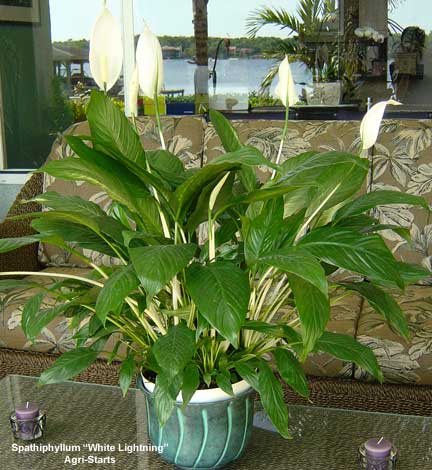
5. Provide opportunities for your family and/or employees to have indoor plants that create healthy air quality in their personal breathing space. The peace lily is my top pick – it filters toxins from the air very effectively, and most important, is almost impossible to kill even if you have a brown thumb.
Tuesday, August 23, 2011
Go Green Initiative Partners with Keep America Beautiful to Promote School Recycling Competition

Are you looking for a fun and creative way to increase recycling participation in your school? Do you need technical assistance and help starting a school recycling program? Recycle-Bowl, a new nationwide comprehensive school recycling competition, could be your ticket to success.
The Go Green Initiative is a promotional partner of Keep America Beautiful’s Recycle-Bowl competition, the first comprehensive nationwide recycling competition for elementary, middle and high-school students. Recycle-Bowl was created to provide students with a fun, interactive way to learn about waste reduction and environmental responsibility through in-school recycling.
Open to all schools and classrooms, the incentive-based recycling competition and benchmarking program kicks off this October and registration is now open on the Recycle-Bowl website at http://recycle-bowl.org. The competition runs from October 17 through November 12, culminating around America Recycles Day. Participating schools will track and report how much recyclable material they collect for a chance to win prizes. At the close of the four-week competition, the school in each state that collects the most recyclable material per capita will win $1,000. A national champion will then be chosen from among the statewide winners to receive an additional grand prize of $2,500.
Educational recycling activities will also be provided on-line and through a registration toolkit. To learn more about the competition, join Keep America Beautiful for a one-hour educator Recycle-Bowl kickoff webinar. The webinar will explain the competition, provide an overview of available resources and highlight the use of a recycling competition at a local Pennsylvania school. The webinar will be held on Tuesday, August 30, 2011 at 4:00 PM EDT. Register via this link - https://www1.gotomeeting.com/register/532593336.
The inaugural Recycle-Bowl is being sponsored by Nestlé Waters North America.
Tuesday, August 16, 2011
5 Easy Tips to Green Your Workplace

- Track your electricity usage each month, and set goals to use less
- Ditto with water usage
- Recycle everything you can, and ensure that you have the proper agreements with both your janitorial service and waste hauler to ensure proper management of your waste and recyclables.
- Use less…paper, plastic, electricity, water…everything.
- Get your entire supply chain onboard. Make sure that what you purchase comes from companies who share your commitment to ‘going green’.
Subscribe to:
Posts (Atom)

 Posts
Posts


